
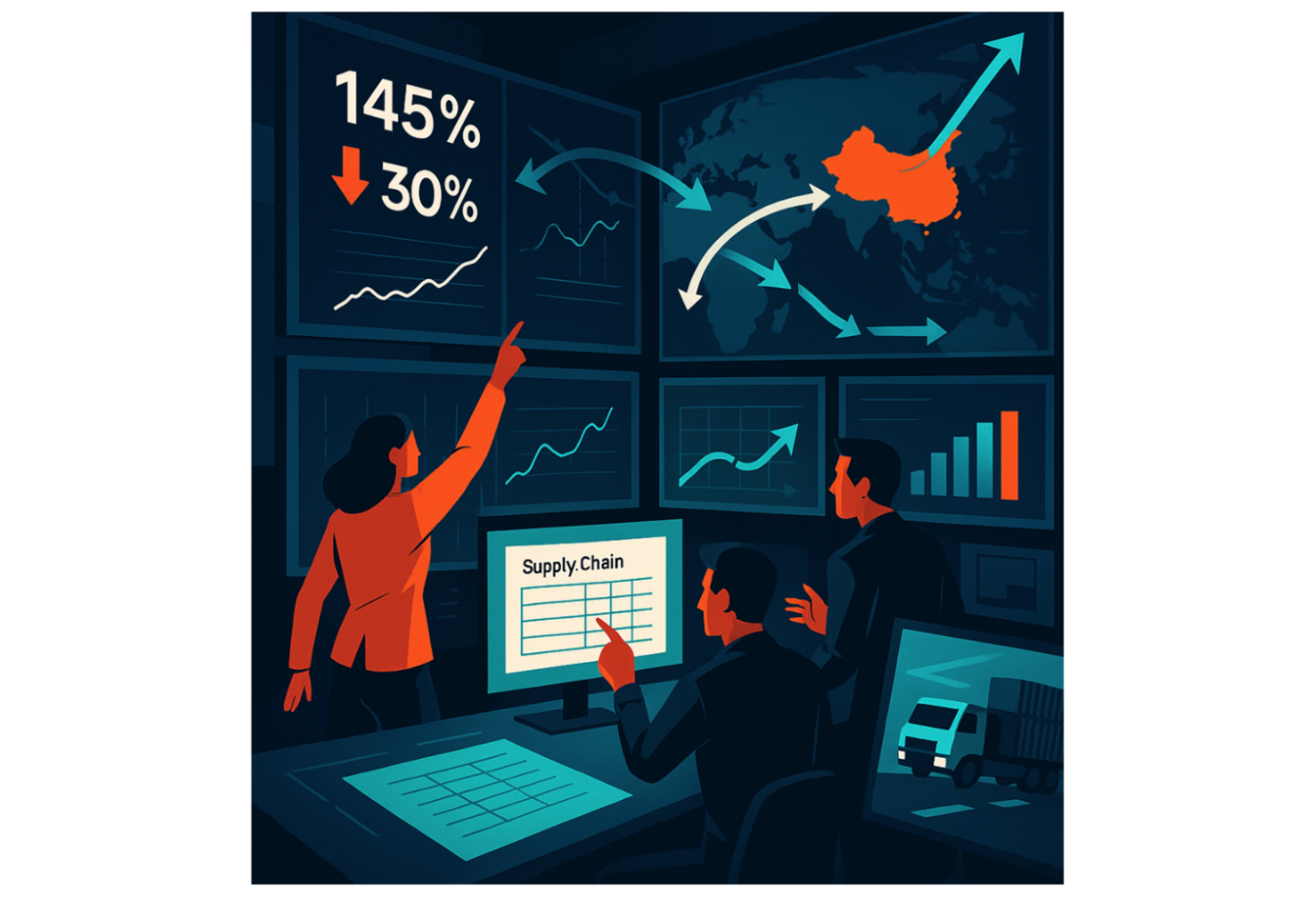
Since the April 2 tariff announcement, many teams have shifted into planning mode. With new duties on Chinese imports potentially rising as high as 145%, companies are under pressure to adjust—often without complete visibility.
But in conversations across the market, a common theme is emerging: it’s not just about having a plan. It’s about being ready to move when the plan needs to go live.
Mapping Exposure Is a Starting Point—Not the Finish Line
Most operators are starting by identifying where the business is most exposed. That means reviewing SKU-level data, supplier concentration, and sourcing geography.

For some, the impact is significant. The CEO of Learning Resources recently shared that expected tariffs could increase their annual costs from $2.3 million to over $100 million if enacted as proposed.
Mitigation Work Is Happening in Real Time
In many companies, mitigation plans are already underway. Teams are adjusting supplier terms, evaluating sourcing diversification opportunities in places like Vietnam or Mexico, and simplifying assortments where alternatives are limited.
Some are also revisiting product classifications or using duty drawback strategies to manage near-term pressure.
What stands out is the level of coordination—procurement, finance, and category teams are working side-by-side rather than waiting for a fully approved shift in policy.
Where Many Are Stuck: Turning Plans Into Motion
Having a scenario or model is essential. However, the pace of change means those models need to be translated into action quickly.
This is where friction tends to show up:
- Internal alignment slows things down
- Ownership is unclear across teams
- Backup options exist—but aren’t yet executable
Meanwhile, other companies are already moving. They’re refreshing cost models weekly. Renegotiating supplier terms in parallel with planning. Messaging customers with clarity and consistency.
Coordination and Speed Are Becoming the Differentiators
Whether a company is public, private, or investor-backed, the common thread among those gaining traction is simple: they’re building the ability to move quickly—not just think quickly.
That may look like a focused project management structure. Or a sprint team built around sourcing and finance. Or even just a faster feedback loop from exposure mapping to execution.
In many of these companies, the goal isn’t to be perfect. It’s to stay ready—and to stay close to the work.
A Window for Action
No one knows how long the current pause will last. But the companies that are gaining confidence right now are the ones using this window to prepare—not wait.
They’re not overreacting. They’re just moving deliberately while others are still analyzing.
If you’re in the midst of recalibrating—whether that’s planning, scenario testing, or making early moves—we’re happy to share what we’re seeing on the ground.