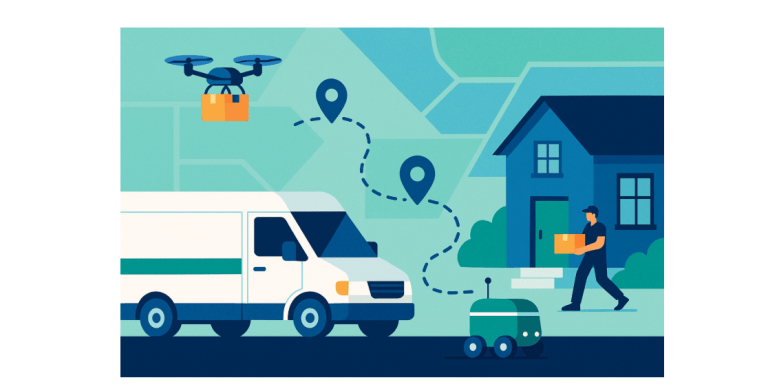

Commercial AI has continued to develop rapidly over the past several years. In just this span, it has gone from the infancy of chatbots to a robust series of AI tools that can assist across every industry.
AI can now empower C-suite executives across the retail sector in countless ways. Time, the most precious resource for any executive, can be saved through automated tasks, key data insights, and improved decision-making, all thanks to AI.
Ultimately, this technology puts the power back in your hands, allowing you to focus on strategic initiatives and high-level tasks.
AI in Retail: An Invaluable Tool
AI has already demonstrated significant strengths in forecasting and enhanced marketing. However, its results in these areas have led to its employment in various other areas as well.
AI for Talent Acquisition
The right talent is the most valuable asset of any business—after all, the more effective the team, the more efficient management will be across the board. Yet, finding talent can be challenging. This is largely because talent acquisition requires significant resources for processing applications, scheduling interviews, and onboarding.
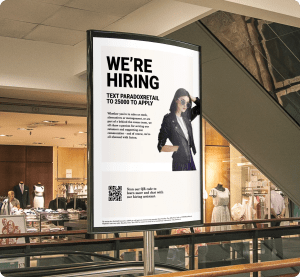
Fortunately, various AI tools have become available to assist in multiple areas of this process. One incredible tool worth mentioning is Paradox.ai, which automates multiple tasks throughout the hiring process. It features an AI chatbot, Olivia, that engages candidates, schedules interviews, and answers questions.
Inventory Management
AI for inventory management is another sector where we see the rapid expansion of AI abilities. Now, there are ample AI tools for forecasting inventory needs and executing resupplies based on numeric levels. However, novel tools are improving the ability to monitor inventory in real time.
For example, Lowe’s, the home improvement retailer, employs small cameras monitored by AI within high-traffic departments. These cameras locate and detect holes within stocked shelves, which will send a notification of the need for a restock.
Kevin Seidehamel, Lowe’s director of market concept and development, states, “The system can determine the specific item—its precise shelf location and whether or not there is additional stock in the store—all before the alert reaches the associate.”
The Power of Conversational AI
Imagine everyone across the organization has standard access to any data they need through a centralized hub. Well, that is precisely what Talla.ai by Bloomfire can do. Talla is a conversational AI that uses natural language processing to help it identify, understand, and categorize data across the business. This makes it easy for executives or other staff to access the necessary data and any additional relevant information quickly.
Moreover, Talla can be integrated with many other internal CRMs and platforms, such as Salesforce and Zendesk. Talla learns over time and will continue to become a more valuable asset to any business.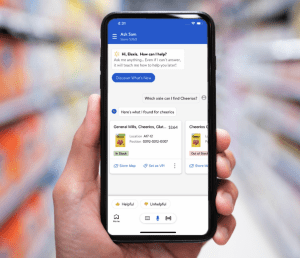
However, conversational AI comes with many added advantages. Because it functions around natural language processing, conversational AI can be used for automated customer service, generating actionable insights, and more. Walmart has adopted this AI in several ways, such as in its “Ask Sam” voice assistant. This assistant allows employees to look up prices, view sales data, locate items, and more.
The Future of AI in Retail Settings
In an ideal organizational structure, executive time is best spent focusing on the larger-scale tasks of operational improvement and expansion. Therefore, by employing AI tools to delegate routine tasks and automate more complex processes, you’re freeing up the C-suite.
As AI technology improves and becomes more accessible, its uses will expand throughout all industries. After all, its current strengths alone have proven monumental in cutting down on wasted time and effort.
So, the question is, how will you take advantage of AI-driven tools within your retail business?